Apr–May
Spring, and the best window
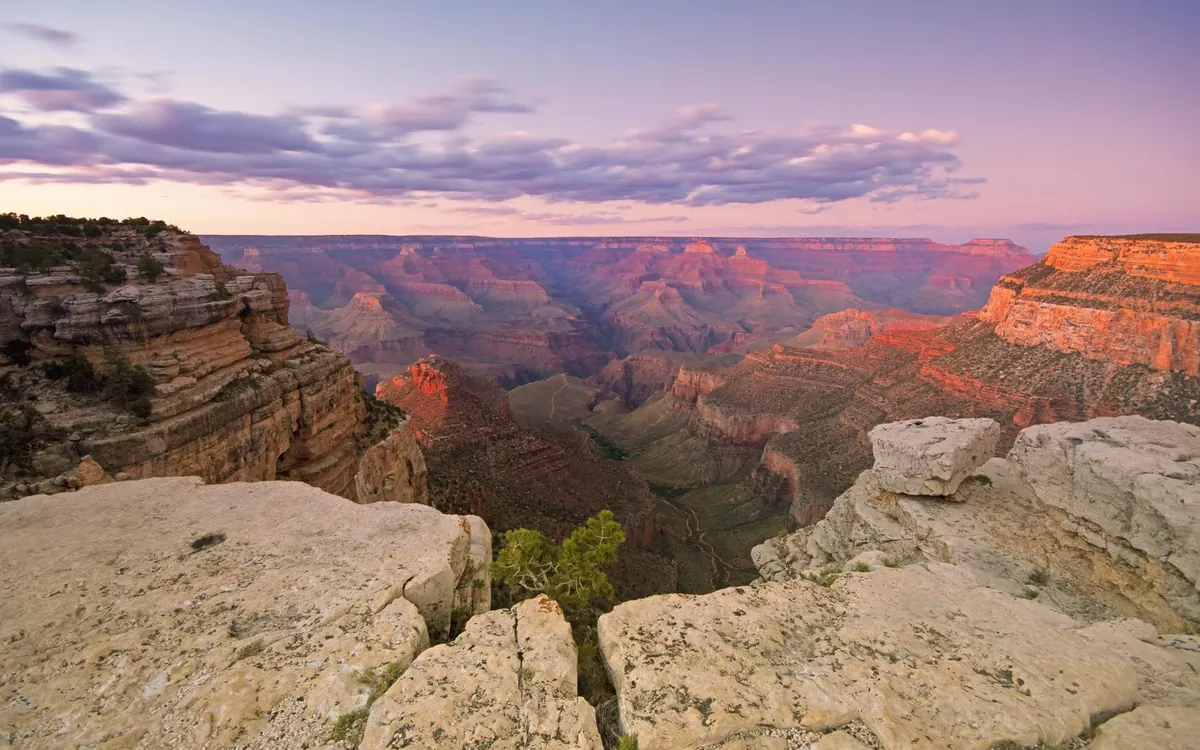
Clear air, low sun raking across the terraces, and no monsoon yet. Comfortable on the rim and steady in the air. May is the single best month to fly here.
Timing
Flights run all year and the canyon never closes, so the season decides comfort and light rather than access. What it really changes is how often the afternoon is flyable — because from early July this plateau builds thunderstorms on an almost daily schedule, and no listing mentions it.
Quick answer
The best time for a Grand Canyon helicopter tour is the first slot of the morning, in April, May, September or October. Those four months give clear air, long shadows in the terraces and comfortable temperatures on a rim that sits at about 2,100 metres. July and August fly perfectly well in the morning and unreliably after lunch. Winter is often the sharpest air of the year and the coldest cabin.
Month by month
Every month flies. This is about light, comfort and how often the afternoon holds.
Apr–May
Clear air, low sun raking across the terraces, and no monsoon yet. Comfortable on the rim and steady in the air. May is the single best month to fly here.
Sep–Oct
The monsoon has ended and the air is washed clean. Low autumn sun, fewer people than summer, and afternoons become reliable again.
Jun–Aug
Hot on the canyon floor, pleasant on the rim, and from early July thunderstorms build over the plateau most afternoons. The first slot matters more in these months than in any other.
Nov–Mar
Cold, quiet and often startlingly clear, with snow on the rim and none at the bottom — a contrast that only exists from the air. Short days and the occasional closed morning.
Why the morning
Calmer air, low sun on the terraces, and no monsoon risk. The first slot wins in every month.
Every operator sells a morning and an afternoon slot at the same price, and the morning is better for three separate reasons that happen to point the same way.
The air is calmer. The Colorado Plateau heats hard through the day and the convection that follows makes a small helicopter work. Early departures are the smoothest flying available, in every month of the year.
The light is better. The canyon is a stack of horizontal terraces, and terraces need low sun to read as terraces. At midday the whole thing flattens into one brown wall; at 08:00 every ledge throws its own shadow. This is the difference between a photograph and a snapshot.
And from July, the afternoon may not happen at all. The North American monsoon builds cumulus over the plateau through the morning and thunderstorms by mid-afternoon. If the best time for a Grand Canyon helicopter tour has to be one sentence, it is: take the first slot they offer you.
There is no wrong month to fly over this canyon. There is a wrong slot, and from July to early September it is the afternoon one.
What grounds a flight→Book direct
Four listings with morning slots in every month, including the two with the most reviews behind them.
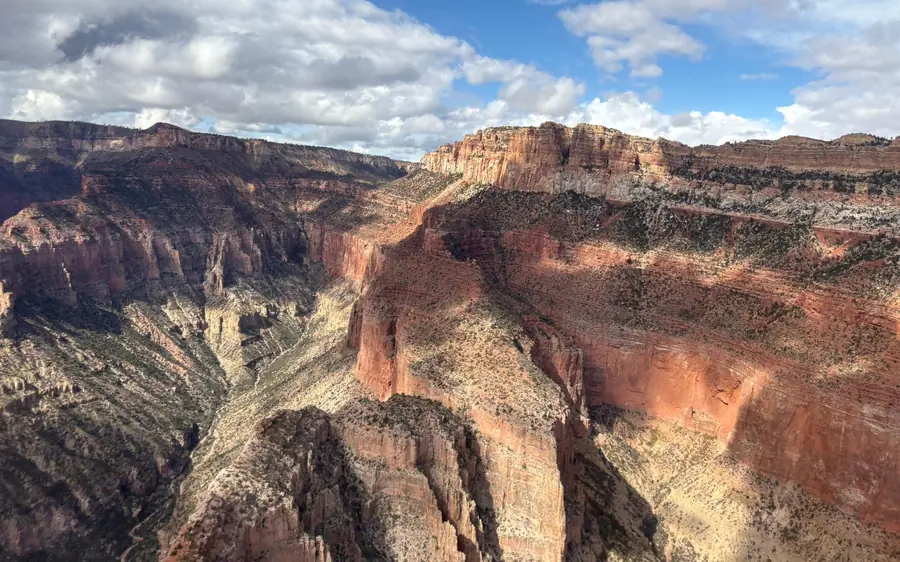
★ 4.9 · 1,935 reviews
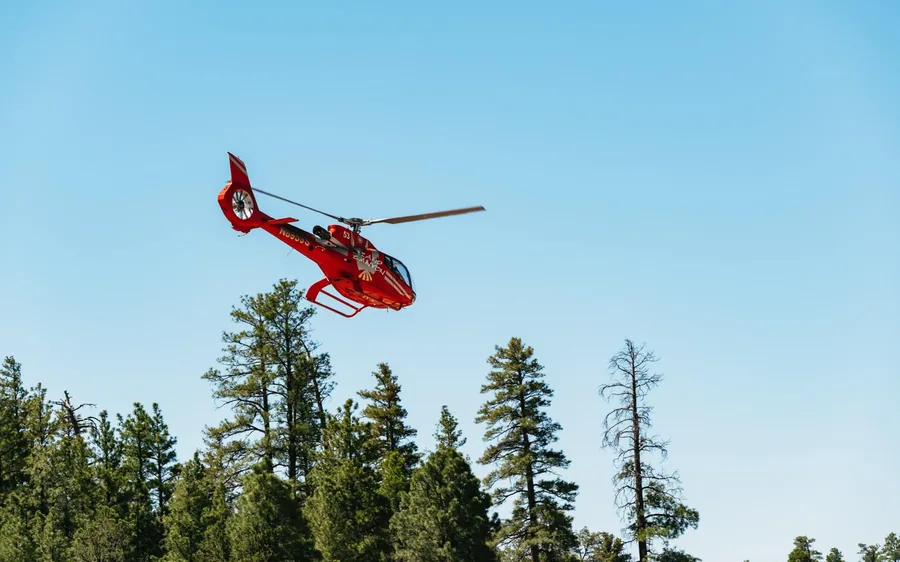
★ 4.7 · 3,052 reviews
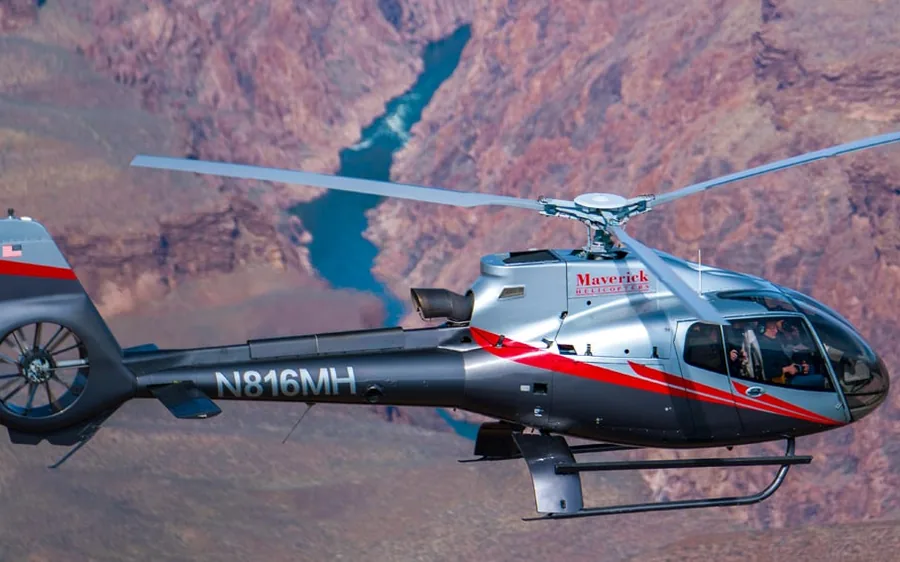
★ 4.9 · 24 reviews
★ 4.6 · 385 reviews
Hour by hour
The first slot wins on air, light and punctuality; mid-afternoon loses on all three.
The month sets the light and the comfort. The hour sets everything else, and no listing mentions it.
The first slot, around 08:00. The plateau air is cold and stable, the sun is low enough that every terrace throws a shadow, and nothing has run late. If you take one thing from this page, take this.
Mid-morning. Still good. The air begins to move as the ground heats, and in summer the first cumulus start building over the plateau.
Midday. The sun is overhead and the canyon flattens into a single brown wall from the air. Perfectly pleasant flying, noticeably weaker photographs.
Mid-afternoon. The riskiest slot for a Grand Canyon helicopter tour. Wind over the rim is at its strongest, delays from the morning have accumulated, and from July this is when thunderstorms arrive.
Late afternoon. The light comes back and it is beautiful — but it is also the slot most likely to have been moved, and in winter the days are too short for it to exist at all.
Month by month, briefly
All of them fly. This is about what you get.
The best window of the year for a Grand Canyon helicopter tour: clear, comfortable and no monsoon.
Hot below, pleasant on the rim, and still dry. Excellent in the morning.
Realistically. The monsoon builds thunderstorms over the plateau most afternoons.
The other best window. Washed air after the monsoon and low autumn sun on the terraces.
Quiet, cold and often startlingly clear. Short days, so fewer slots.
Snow on the rim and none at the bottom, which only exists as a view from the air. The sharpest visibility of the year on a good day.
Common questions
The best time for a Grand Canyon helicopter tour is the first slot of the morning, in April, May, September or October — clear air, comfortable temperatures and low light on the terraces.
Yes, all year. Winter mornings are often the clearest of the year, with snow on the rim and none at the bottom. The cabin is cold.
Only the afternoons. From early July the monsoon builds thunderstorms over the plateau most days. Morning flights in July are excellent.
Morning, every time. Calmer air, better light, and no accumulated delay from earlier flights.
A few days is usually enough. The binding constraint is weather days rather than availability, so book for early in your stay.
Yes. The canyon is horizontal terraces, and terraces need low sun. Midday flattens the whole thing into one brown wall.
Go deeper
From $174 to $999, and what a minute in the air is worth.
The verdictOne recommendation for each kind of traveller, and why.
South RimThe national park itself — and why nothing lands there.
West RimHualapai land, the Skywalk, and the only legal landings.
LandingsFour thousand feet below the rim, and where it is allowed.
The rideCheck-in, the weigh-in, the doors, and the first drop.
Grand Canyon National Park: South Rim Scenic Helicopter Tour
★ 4.9 · 646 reviews · Free cancellation 24 h