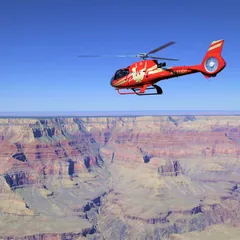
Grand Canyon National Park: South Rim Scenic Helicopter Tour
★ 4.9 · 1,935 reviews
- Grand Canyon National Park: South Rim Sc
- Grand Canyon National Park
- Bestseller
- Free cancellation
The ride
From booking to walking back out is about two hours, and roughly a quarter of it is spent in the air. If you have never been in a small helicopter, this is what a helicopter ride over the Grand Canyon is like on the ground, in the cabin and in the first four minutes — written by the minute rather than by the brochure.

Quick answer
Allow about two hours in total for a flight of twenty-five to forty-five minutes. You check in, you are weighed, you are briefed, the pilot seats the cabin by weight, and then you walk out under a turning rotor. A helicopter ride over the Grand Canyon is loud, close and much smoother than people expect — and the moment that matters arrives about four minutes after lift-off.
Minute by minute
Weigh-in, briefing, four minutes of forest, and then the edge. The rest is what you paid for.
Check-in, about forty-five minutes before. Photo ID, your booking, and then the weigh-in. It is done quietly on a floor scale and it is not a formality: the pilot uses the numbers to balance the aircraft, which is why nobody chooses their own window.
The briefing. Ten minutes or so: the harness, the doors, how to approach and leave the aircraft, and the rule about never walking uphill of a helicopter on sloping ground. Headsets are handed out here.
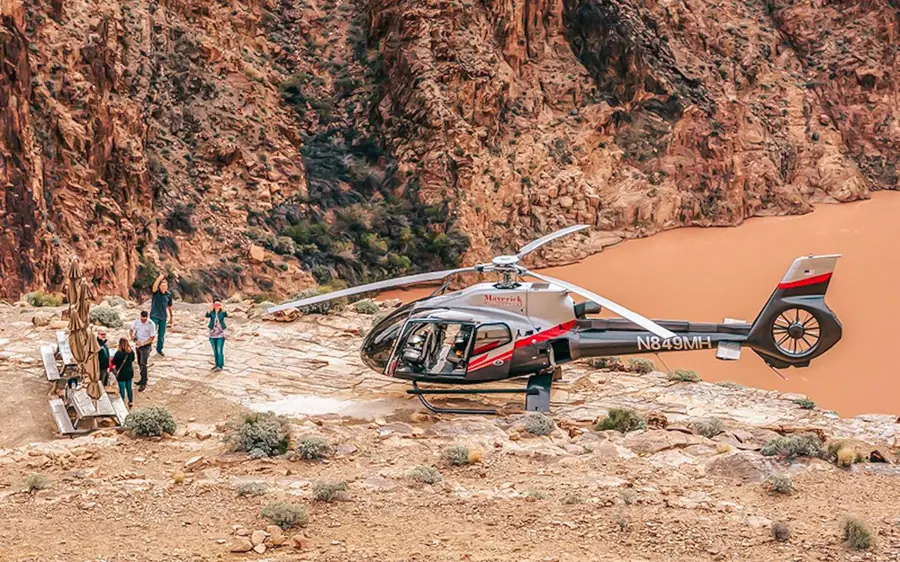
The walk out. In a line, ducking, usually with the rotor already turning. It is the loudest part of the day and the part everyone films.
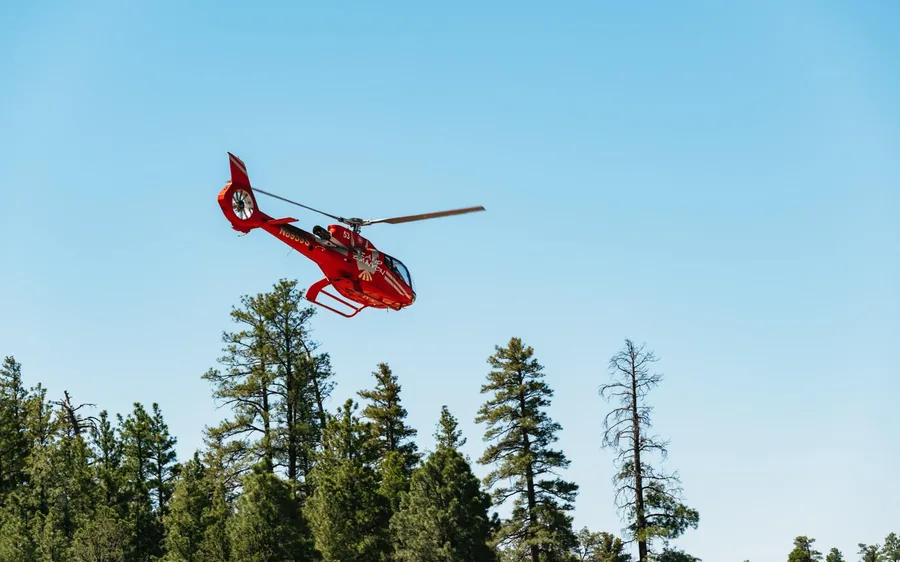
Lift-off, and four minutes of forest. Flat ponderosa pine to the horizon. People start to wonder whether they have been sold something.
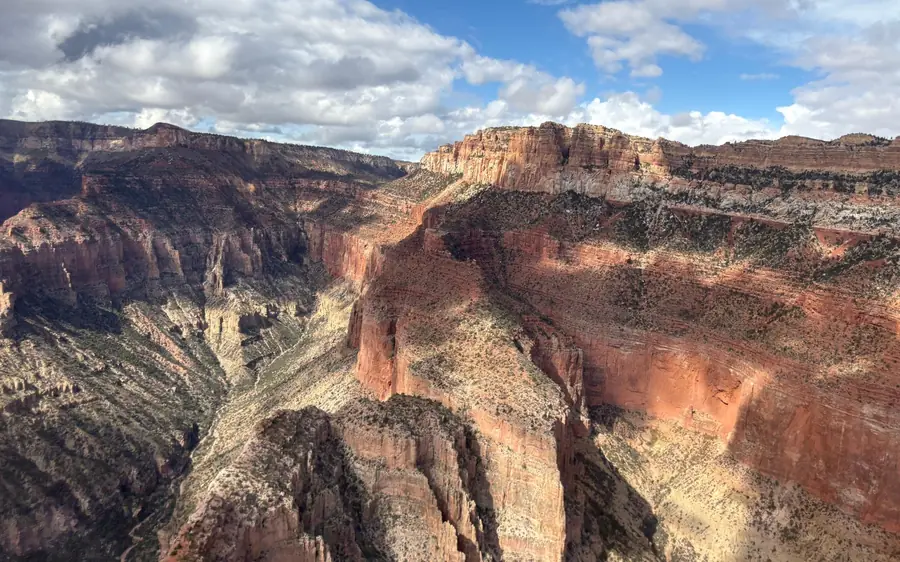
And then the ground stops. The forest runs to an edge and there is a mile of air beneath you. This is the moment a helicopter ride over the Grand Canyon is sold on, and it does not disappoint anybody.
The rest. The Dragon Corridor, side canyons opening one after another, the Colorado a green thread at the bottom, and on the longer flights the crossing to the far rim. Then back over the pines, which look entirely different now.
In the cabin
The answers people want and the listings do not give.
The plateau air is stable in the morning and the turns are gentle. Motion sickness is uncommon on these routes.
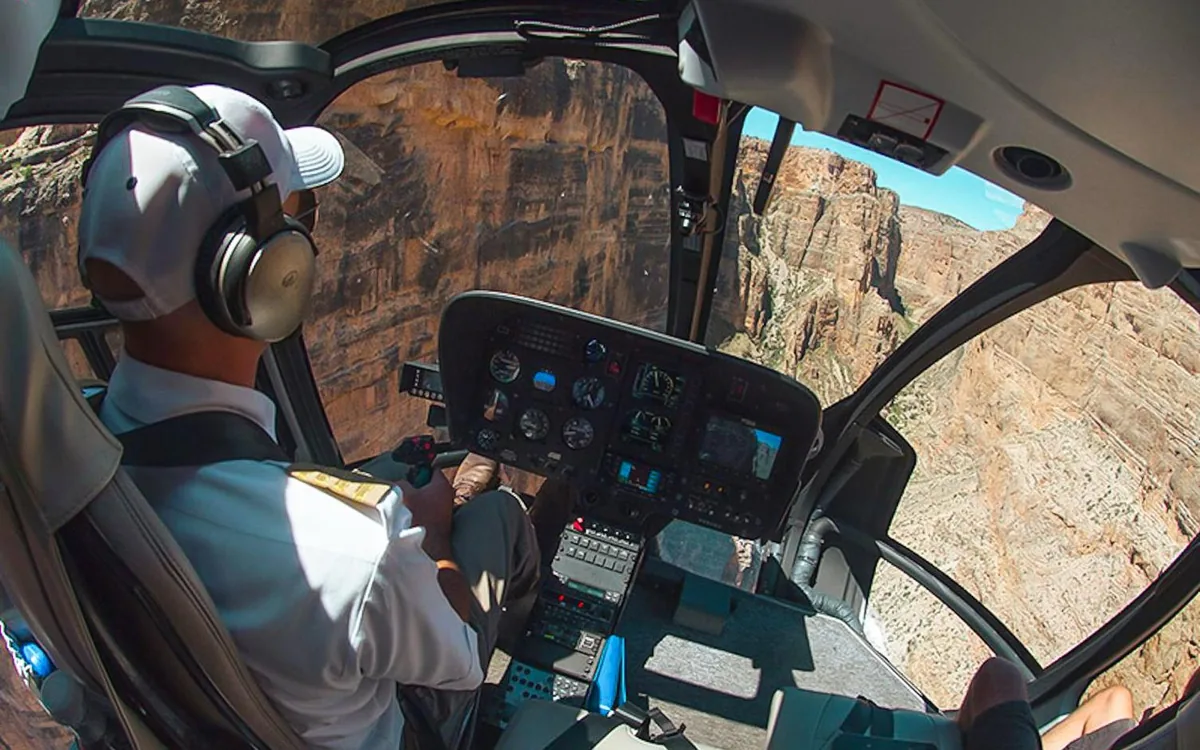
Rotor noise is constant; through the headset the pilot is perfectly clear, and the commentary is most of what tells you what you are looking at.
The cabin is balanced by weight. Ask at check-in which side the route favours — the desk usually knows — but it is not a choice.
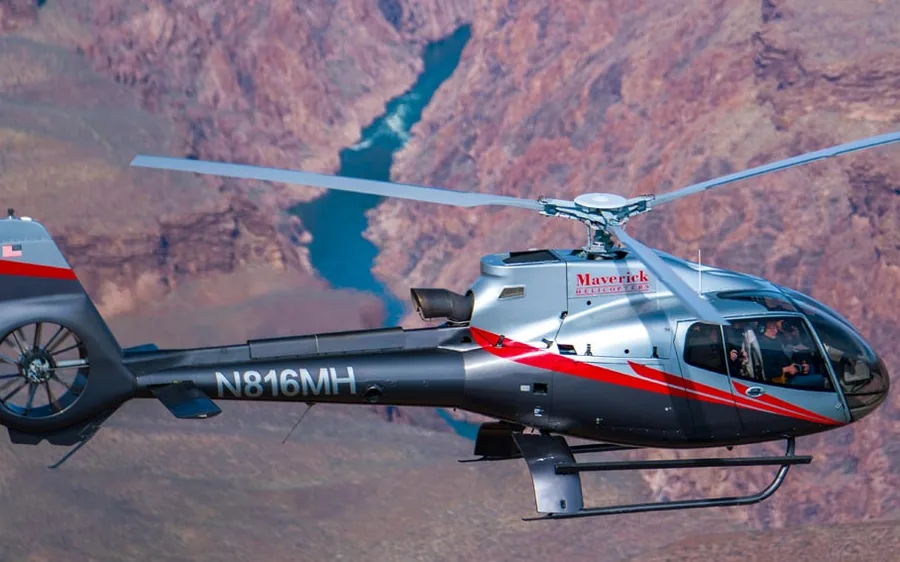
Bubble windows are excellent overhead and distort at the edges. Lean in, keep the lens off the perspex, and turn the flash off.
Any helicopter ride over the Grand Canyon starts at about 2,100 metres. Morning flights need a real layer in any season.
Hats, scarves and long straps stay in the terminal. You walk out under a turning rotor.
The best single decision you can make about a helicopter ride over the Grand Canyon is the time of day. The first slot of the morning has the calmest air, the longest shadows in the terraces, and no thunderstorm risk in July and August.
When to fly→Book direct
The classic forty-five minutes, the short twenty-five, the cheapest thirty, and the one that lands at the bottom.
★ 4.9 · 1,935 reviews
★ 4.9 · 24 reviews
★ 4.7 · 3,052 reviews
★ 4.6 · 385 reviews
Photographing it
Wide lens, flat glass, no flash, and put it down for the corridor.
Wide, always. The mistake everyone makes is zooming. The canyon is too big for a long lens to say anything about, and the frames people keep are the wide ones that show a side canyon inside the main one.
Shoot through flat glass. The bubble windows on these aircraft are superb overhead and distort badly at the edges. Lean in, keep the lens off the perspex so vibration does not travel into it, and brace your elbows rather than the camera.
Turn the flash off before you board. It bounces straight back off the canopy and ruins the frame, and on a helicopter ride over the Grand Canyon there is more than enough light anyway.
Shoot the four-minute mark. The edge, with flat forest on one side and a mile of air on the other, is the most telling photograph of the whole flight and it lasts about fifteen seconds.
And put the camera down for the Dragon Corridor. Everyone who has taken a helicopter ride over the Grand Canyon says the same thing afterwards: the part they remember is the part they watched rather than filmed.
Nervous flyers
A helicopter ride over the Grand Canyon is a mild experience by the standards of small aircraft, and there are things that make it milder.
Pilots here do this thousands of times a season and will seat you accordingly and talk you through it.
The plateau air is at its calmest before the ground heats.
Every listing on this site flies sealed. There is no open-door option to worry about.
A fixed-wing tour at $174 is higher, quieter and steadier, with 1,608 reviews at 4.8.
Flying at altitude on an empty stomach is worse than flying on a small breakfast.
Twenty-five to forty-five minutes, and the first four are over flat forest.
Common questions
About two hours from check-in to walking back out, for a flight of twenty-five to forty-five minutes. The weigh-in, the briefing and the walk out all sit outside the advertised duration.
Less than people expect. The aircraft fly with doors closed, the air over the plateau is stable in the morning, and the turns are gentle. Say so at check-in if you are nervous.
It is uncommon on these routes. If you are prone to it, take the first slot of the morning, when the air is calmest.
No. Every listing on this site flies with doors on and windows closed.
Four to six passengers depending on the aircraft, plus the pilot. Everyone is weighed and seated to balance the machine.
Photo ID, sunglasses, a layer, and a camera with a strap you can control. Nothing loose on your head.
Go deeper
From $174 to $999, and what a minute in the air is worth.
The verdictOne recommendation for each kind of traveller, and why.
South RimThe national park itself — and why nothing lands there.
West RimHualapai land, the Skywalk, and the only legal landings.
LandingsFour thousand feet below the rim, and where it is allowed.
The operatorsThe names people search for, and what the rules make them do.